New Release
Chemicals > Odour Control & Deodorisers
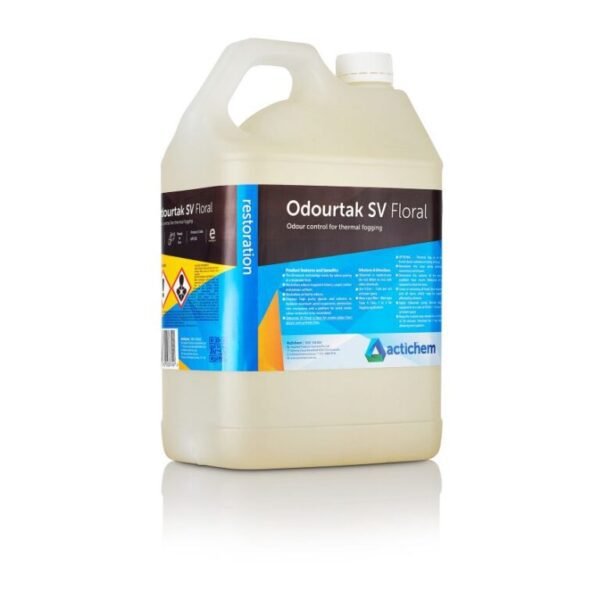
Odourtak SV
$55.00 - $222.73
Select Section
Overview
Intro:
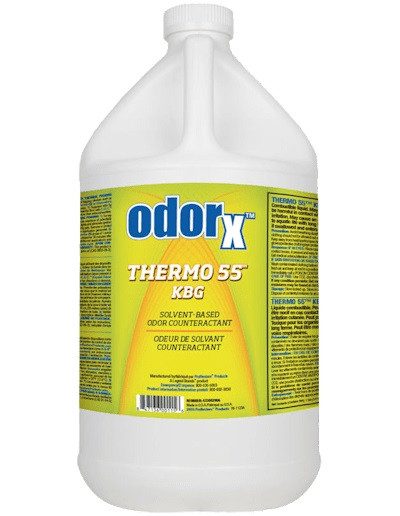
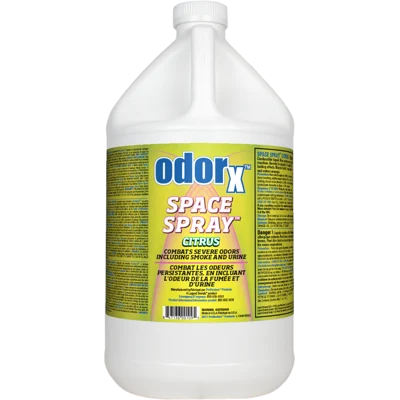
Actichem Odourtak SV is a solvent-based odour control solution designed for thermal fogging in fire remediation. It neutralises smoke and soot odours at a molecular level, penetrating porous materials to treat attics, sub-floors, stripped-out buildings, and other non-inhabited spaces after protein, paper, or timber fires.
Key Benefits:
- Molecular odour neutralisation converts mal-odour compounds into inert, non-reversible forms
- Optimised for thermal fogging to reach micropores and hidden cavities
- Solvent-based formulation enables maximum aerial suspension and penetration
- Effective on protein, timber, paper, and synthetic fire odours
- Leaves a citrus fragrance to refresh treated areas
Applications:
- Initial knock-down of smoke odours on job entry
- Post-fire remediation treatment of non-inhabited zones
- Attics, sub-floors, stripped-out buildings, and other hard-hit environments
- Suitable for fire odours caused by protein, timber, paper, and synthetic materials
Features:
- Ready-to-use, do not dilute or mix with other chemicals
- Application rate: 0.5ml – 1.5ml per m³ of air/room space
- Applied via thermal fogging equipment
- Minimum 30-minute dwell time and 1-hour ventilation before re-occupation
- Requires protective clothing and respiratory protection (Type A or CF22 A2 filters meeting AS/NZS 1715/1716)
- Covers large areas efficiently with micro-droplet fogging
Why Choose This Product:
Professionals select Odourtak SV for high-performance, solvent-based odour neutralisation in fire-damaged environments. Its deep penetration, molecular neutralisation, and thermal fog optimisation ensure effective restoration of air quality in challenging, non-inhabited spaces.
Specifications:
- Brand: Actichem
- Product Type: Solvent-Based Odour Control
- Volume: 1 Litre
- Fragrance: Citrus
- pH: Solvent
- Dilution: Ready-to-use
- Colour: Clear
- Safety: Danger – requires protective clothing and respiratory protection
- Application Method: Thermal fogging equipment
- Coverage: 0.5ml – 1.5ml per m³ of air
Specifications
Model
Odourtak SV
Size
1L, 5L
Fragrance
Citrus, Floral
SKU
ACT-FAMILY-ODOURTAKSV
Weight
6 kg
Tags
1L, Actichem, fire remediation, non-inhabited space, odourtak sv, professional odour neutraliser, protein fire odour, smoke odour remover, solvent odour control, thermal fogging, timber fire odour